What is Astrology?
Introduction to the art of interpreting the stars

Can you imagine a world before humanity had conjured up the idea of a calendar or a clock? At this point it is hard to think how we would operate in such an environment. Our lives are now dictated by schedules, appointments, and time stamps. In fact it wouldn’t even be possible for society to exist as we know it without systems to keep track of time. But where do these systems come from? And how did we get to the point we are at today?
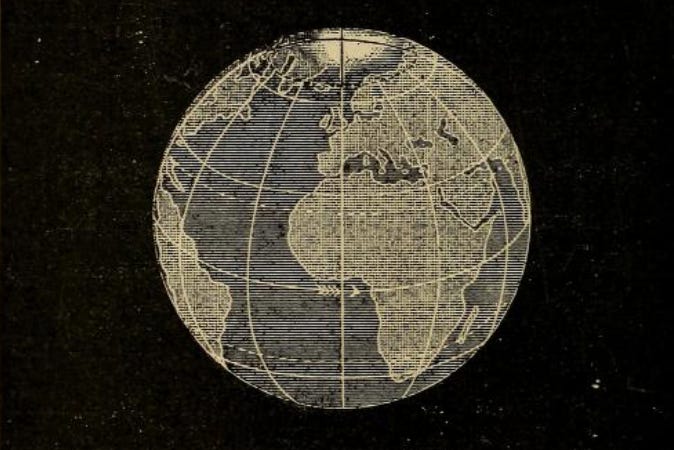
Civilization— the stage of human society and culture, is downstream of something absolutely revolutionary, agriculture. The transition from a nomadic lifestyle to an agrarian one required the development of complex calendrical systems to identify seasons for planting, cultivating, harvesting, and storing away food. The growing prevalence of this way of life not only introduced new ways of sourcing nourishment, but also lead to the development of specified roles within the community. This allows for some people to grow food, or tend to animals, while others build homes. As villages start to develop and people’s roles within their town become increasingly specialized, we see all walks of life develop. Only then is it possible for there to be soldiers, sailors, traders, potters, builders, bakers, and all of the different professions we have grown accustomed to. One such role, was that of the diviner, a person who seeks to know the will of the gods.
It is without a doubt that there are forces more powerful than you or I. The sky, sea, and land have been there long before you, and will remain long after you. Each one has their own nature, think about the roaring sea who may rage angrily in a storm or the deceitful desert who may play tricks on your eyes. These forces can be personified through poetic language. Since human beings are relational and social creatures, learning about a person, place, or thing follows a similar structure. By paying attention to a person’s behavior you get to know them, and you learn what actions ally yourself with them to create harmony. If you are getting to know someone you aren’t familiar with it can be helpful to have a friend who does know them and can give you an introduction. Or if someone speaks a different language than you, it is even better to have a translator, someone who knows the language and can help you communicate. When it comes to the spirits of nature this is no different. Someone who is familiar with the woods will be able to find their way through trees which look the same to the untrained eye.
Forces of nature speak to us all the time, through various indicators or signs. The world is not senseless but rather every effect we see manifest had some prior cause to bring it about. The cosmos operates according to reason, if x, then y. Our language follows the exact same pattern, a specific spoken sound or written symbol has a particular meaning attached to it. Omens operate under this principle as well, so that we can actually read the signs we see around us and hear what these spirits have to say. They sky will warn you of future weather conditions by sending the appropriate clouds ahead of time. Those who learned the sky’s language could warn others, diving the will of the winds.
The word “Astrology” comes from “Astron” meaning star, and “ology” referring to the study or language of something. We see that at its core astrology is the language of the stars. As society grew, and civilization became increasing complex, our systems for dividing up time became more elaborate. Here a new profession emerges, that of time-keepers, and hour-watchers, diviners who speak to the stars.
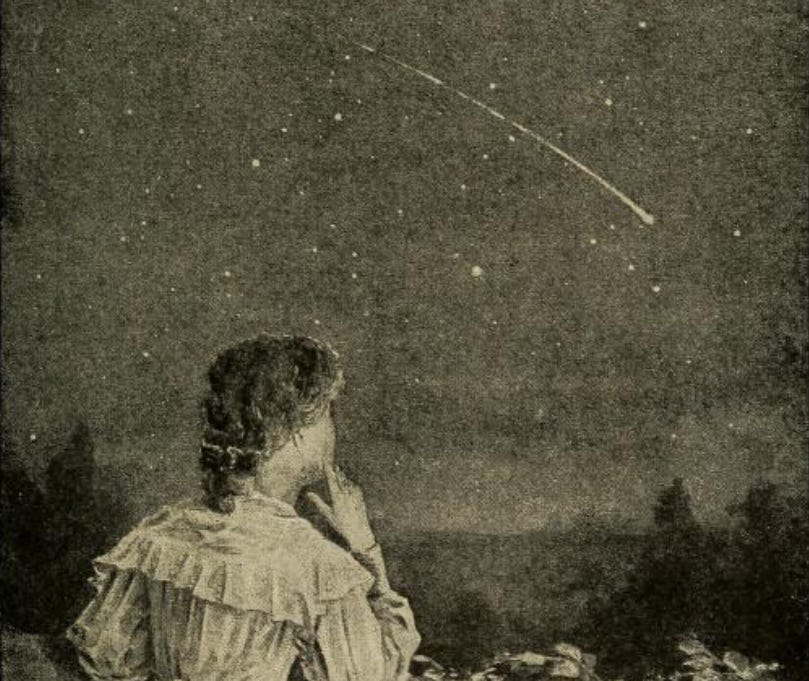
People began to specialize in observing celestial phenomenon and tracking how they corresponded to events in the world, developing a language of the stars, astrology. Before a formalized system materialized, these night-watchers would take note of the omens they witnessed in the sky. They would send catalogs to the king which detailed celestial movements along with the events that occurred here on earth. The appearance and disappearance of various stars and planets were closely monitored along with eclipses, comets, and other alignments. In the early days this practice is more accurately called “astral-omenology” as much of the core language of astrology had yet to be fully developed.
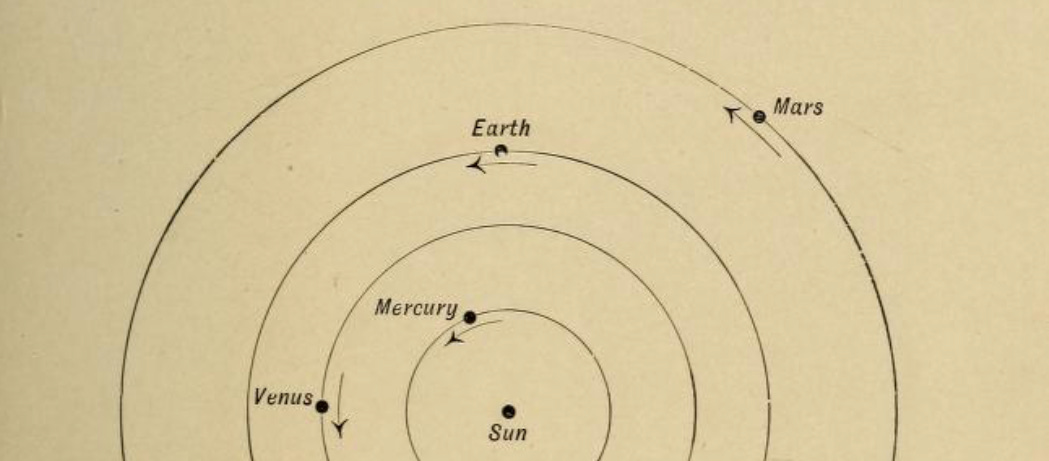
At first the planets appear to be moving freely since they are moving at their own rates, but as mathematics advanced it became apparent that the planets are bound to set courses in accordance with a mathematical order. This transforms our understanding of each planet from being gods, to being messengers of a higher spirit or divinity. What were once celestial gods came to be understood as heavenly angels announcing the will of an invisible and superordinate God. Each planet marking the passage of time rather than appearing wherever they so please.
Before diving deeper, we should define exactly what time is. I am particularly fond of the way Plato describes time in the Timaeus, his work on metaphysics. In this famous dialogue, he presents time as the moving image of eternity. But what does that mean? Well, eternity is without beginning and without end, the infinite timeless expanse of all that was and will be. The idea is that this exists all at once, the past, the present, the future they all exist in the infinite stillness of what is. Time is the apparent movement through eternity, the future becoming the present, and the present becoming the past. Think of a flip book with pictures drawn on each of the pages so that when someone takes their finger and flips through the booklet a moving image appears. Every frame already exists in the book just like every moment already exists within eternity. Time divides the infinite into the finite so that change can be experienced. This process of change, and movement through time, is primarily seen through the movement of celestial bodies. The Sun rises and sets, as do all the stars as they appear over the eastern horizon, move across our skies, and set in the west. We divide up eternity using the motion of the Sun, Moon, and stars, creating pages in our flip book of life.
For time to appear to move, there must be an observer, someone who experiences the changes. This is the one who is watching the moving images in our flip book, it is each and every one of us as we move through our lives and experience the unfolding of eternity. The thread of continuity across our life is our psyche, our soul, the receptacle of all of our experiences. You can picture it as a screen at a movie theater in which the moving images of eternity are projected upon. A mirror which reflects the light of the divine. The whirling heavens stir our soul impressing images upon us which become reflected into our life. As we gaze up at the stars, we look inward and come to understand ourselves.
The soul, like our person flipping through the booklet, is thought to be immortal and outside the trappings of time. When we are born the soul incarnates into the world of change, going from a state of timeless being to the world of becoming. We can describe this as the soul descending through the planetary spheres, picking up the qualities of the planets as it journeys down.
When someone is born the stars proclaim the nature of their soul. Through the continued movement of the celestial spheres we can track the unfolding of a person’s life and who they are becoming.